El Vocabulario del Fotógrafo para IA: Términos de Iluminación Que Realmente Cambian Tus Resultados
The Photographer's Vocabulary for AI: Lighting Terms That Actually Change Your Results
Most AI users describe lighting as "good" or "dramatic." Photographers use 50+ specific terms — and AI models understand every single one.
Last week I generated the same portrait four times. Same subject description, same composition, same aspect ratio. The only thing I changed was two words describing the light. The first attempt said "good lighting." It looked fine — flat, forgettable, the kind of image you scroll past. Then I swapped in "Rembrandt lighting." Suddenly there was a triangle of light on the shadowed cheek, the nose shadow connecting to the cheek shadow, real dimension in the face. Same prompt. Two words. Completely different photograph.
That moment crystallized something I'd been noticing for months. The single fastest way to level up your AI-generated images isn't better subject descriptions or more detailed compositions. It's learning how photographers talk about light.
Why Photography Words Work So Well
Here's the thing most people don't think about: AI image models weren't trained on random internet pictures with random captions. A massive chunk of their training data comes from photography communities — Flickr, 500px, photography forums, stock photo databases. These images come with EXIF data, photographer descriptions, and community tags that use precise technical vocabulary.
When a photographer uploads a portrait to Flickr, they don't tag it "nice lighting." They write "Rembrandt lighting with a 36-inch octabox camera left, 1:3 ratio fill." Thousands and thousands of images, tagged with exact lighting terminology, fed into training datasets. The model learned what those words look like.
So when you type "Rembrandt lighting" into a prompt, you're not being fancy. You're speaking the model's native language. You're activating a very specific cluster of visual associations that map to real photographs with real light. Generic words activate generic averages. Specific words activate specific looks.
This works across every major model — Midjourney, Stable Diffusion, FLUX, Ideogram. The vocabulary is universal because the training data sources overlap heavily.
Sculpting Shadow: Dramatic and Moody Light
If you want images with weight, with tension, with that feeling of something lurking just outside the frame — you need to understand how photographers create drama with shadow.
Rembrandt lighting is the workhorse of dramatic portraiture. Named after the painter who used it obsessively, it places the key light high and to one side, creating a small triangle of light on the shadowed cheek. It's specific enough that the AI knows exactly what to do.
Compare these two prompts:
portrait of a woman, dramatic lighting, dark background
portrait of a woman, Rembrandt lighting, dark background
The first gives you something vaguely moody. Could be anything. The second gives you that precise triangle, the nose shadow connecting downward, one eye brighter than the other. It's the difference between asking for "food" and asking for "carbonara."
Chiaroscuro goes further. This is the Renaissance technique of extreme contrast between light and dark — think Caravaggio, not just Rembrandt. The shadows aren't just deep, they're ink-black. The lit areas seem to glow against void. I use this when I want something that feels like a painting more than a photograph.
old man reading a letter, chiaroscuro lighting, oil painting style
That prompt consistently produces images with pools of warm light surrounded by impenetrable darkness. The AI understands chiaroscuro as an entire aesthetic system, not just a lighting direction.
Low-key lighting is related but distinct. In photography, low-key means the image is predominantly dark tones with selective highlights. It's a tonal choice as much as a lighting setup. Where chiaroscuro implies a specific dramatic tradition, low-key is more broadly cinematic.
musician playing piano, low-key lighting, side lit
Adding "side lit" to "low-key" gives the AI two clear instructions: keep it dark overall, but make the light directional. The result is usually a silhouette-adjacent image with just enough light raking across the subject to reveal form. Gorgeous for moody editorial work.
Making People Look Beautiful: Soft and Flattering Light
Not everything needs to be a Caravaggio painting. Sometimes you need skin that glows, shadows that wrap gently, light that makes a person look like their best self. Fashion and beauty photography have spent decades perfecting this, and the vocabulary transfers beautifully to AI.
Butterfly lighting (also called Paramount lighting — named for the Hollywood studio that used it on every starlet in the 1930s) places the light source directly above and in front of the subject. It creates a small shadow under the nose shaped like a butterfly. It makes cheekbones pop. It's universally flattering.
fashion portrait of a woman, butterfly lighting, white background, beauty photography
Compare that to the same prompt with just "studio lighting" — you'll get something competent but generic. Butterfly lighting tells the model to put that light high and centered, and the result is immediately more polished, more intentionally glamorous.
Beauty dish is technically a piece of equipment, not a technique, but AI models understand it as a look. A beauty dish produces light that's harder than a softbox but softer than a bare strobe — this focused-but-forgiving quality that fashion photographers love. It wraps around facial features while still maintaining some contrast and definition.
close-up portrait, beauty dish lighting, catchlights in eyes, editorial beauty
The "catchlights in eyes" addition is a photographer's trick that works surprisingly well in prompts. Real beauty dish setups create distinctive round catchlights, and specifying them nudges the AI toward that precise quality of light.
Diffused lighting is your safe choice when you want soft, even, shadow-free illumination. Think of light passing through a white curtain or a giant silk panel. No hard shadows anywhere. Great for product shots, food photography, or any time you want the subject to feel approachable and clean.
product photo of a perfume bottle, diffused lighting, light grey background, commercial photography
Without "diffused," you might get hard reflections and harsh shadows on the bottle. With it, the light wraps around the glass evenly and everything feels premium.
The Cinematic Look: Light as Storytelling
Cinema uses light differently than still photography. It's about mood over technical perfection, about making you feel like you're watching a story unfold. These terms push AI models into that filmic territory.
Rim lighting (or edge lighting) places light behind the subject so it outlines their edges with a bright halo while the front stays relatively dark. It separates the subject from the background and creates instant drama. Every sci-fi movie poster uses it. Every single one.
portrait of a man in leather jacket, rim lighting, dark moody background, cinematic
That "cinematic" at the end isn't filler — it tells the model you want the film-grade version of rim lighting, not the YouTube-tutorial version. Context words matter alongside technical terms.
Backlighting is rim lighting's more atmospheric cousin. Instead of a tight edge glow, backlighting floods the background with light, often creating silhouettes or semi-silhouettes. Hair catches fire with a golden halo. Dust particles become visible. It's inherently romantic.
couple standing in doorway, backlit, golden light, dust particles visible, 35mm film
I added "35mm film" because backlit scenes on film have a specific quality — halation around bright areas, slightly muted shadows — that digital backlighting doesn't replicate. The AI picks up on that combination and produces something that genuinely looks shot on film.
Lens flare isn't a lighting setup per se, but it's a light artifact that signals "cinema" to both humans and AI models. Used intentionally, it adds energy and a sense of being there. J.J. Abrams built half a career on it.
astronaut walking toward camera, lens flare from sun behind, anamorphic, sci-fi atmosphere
"Anamorphic" is the secret sauce here. Anamorphic lenses produce those distinctive horizontal streak flares you see in high-budget films. The AI knows what anamorphic flares look like versus standard spherical lens flares. Specificity wins again.
Working with What's Already There: Natural Light
Natural light is what most people think of as "just... light." But photographers break it down into a dozen subcategories, each with a completely different feel. AI models understand all of them.
Golden hour — the 30-60 minutes after sunrise or before sunset. The light is warm, low-angled, long-shadowed, and absurdly flattering. It's the most commonly tagged lighting condition in photography datasets, which means AI models are extremely good at reproducing it.
woman walking through wheat field, golden hour, warm backlight, long shadows
You almost can't mess this up. Golden hour is so heavily represented in training data that even mediocre prompts produce beautiful results with it. But stacking it with specific details ("long shadows," "warm backlight") pushes the output from nice to breathtaking.
Overcast lighting is the opposite of dramatic, and that's exactly why it's useful. An overcast sky acts like a massive softbox — diffused, even, shadowless. Skin tones render accurately. Colors stay saturated without being bleached by harsh sun. It's the portrait photographer's secret weapon for outdoor shoots, and it works just as well in prompts.
street portrait in Tokyo, overcast day, even natural light, muted color palette
Window light has been a tool for painters and photographers for five hundred years. Light enters from one direction, falls off gradually, creates gentle modeling on anything it touches. Vermeer built his entire body of work on it.
woman reading book at table, window light from left, soft shadows, interior, warm tones
Specifying the direction ("from left") gives the AI a clear instruction about where the light source is. Without it, you might get flat front lighting. With it, you get that beautiful, dimensional, one-sided illumination that makes everything look like a Dutch master painting.
Dappled light — sunlight filtering through leaves, creating a pattern of bright spots and shadows. It's specific, evocative, and the AI handles it remarkably well.
portrait in forest, dappled sunlight on face, bokeh, natural environment
That single word "dappled" does enormous work. Without it, forest portraits tend to be either too dark (deep shade) or too bright (clearing). Dappled tells the model to create that specific interplay of scattered sun and leaf shadow.
Studio Control: When You Want Precision
Studio lighting terms give you the most predictable, consistent results because studio setups are exhaustively documented in training data. Every photography tutorial, every lighting diagram, every behind-the-scenes video — the AI has seen all of it.
Ring light produces that distinctive look: even front illumination, circular catchlights in the eyes, minimal shadows. It's become synonymous with beauty content and social media, and the AI knows it.
close-up selfie portrait, ring light, vibrant makeup, high contrast, social media style
Softbox lighting is the studio default. Soft, directional, professional. When you say "softbox," the AI understands you want that clean, controlled, slightly directional quality that defines commercial photography.
product flat lay, softbox lighting from above, white background, e-commerce style
Three-point lighting is the foundational studio setup: key light (main), fill light (shadow reduction), and backlight (separation). Mentioning it tells the AI you want balanced, professional, well-separated illumination — the kind of setup that makes talking-head videos and corporate portraits look polished.
business headshot, three-point lighting, grey background, professional, sharp
Stacking: Where It Gets Interesting
Here's where real power lives. You don't have to use just one lighting term. Combining them tells the AI exactly what you want in a way that a single term can't.
portrait of jazz musician, Rembrandt lighting, warm color temperature, subtle rim light from behind, smoky atmosphere, shot on medium format
That prompt layers a primary lighting style (Rembrandt), a color quality (warm), a secondary light source (rim light from behind), an atmospheric element (smoky), and an equipment reference (medium format). Each term constrains the output further, pushing toward something very specific.
A few combinations I've found consistently powerful:
Golden hour + backlighting + lens flare creates the quintessential dreamy outdoor portrait. The warm tones, the halo effect, the organic flare — they reinforce each other.
dancer on rooftop at sunset, golden hour backlight, natural lens flare, flowing dress, wind, warm tones
Chiaroscuro + window light + film grain produces something that looks like it was shot in a Renaissance Italian apartment on expired Kodak stock. Moody, textured, timeless.
old woman's hands kneading bread, chiaroscuro window light, film grain, rustic kitchen, warm shadows
Beauty dish + rim light + high key is the editorial beauty trifecta. Flattering front light with edge separation on a bright background.
beauty portrait, beauty dish key light, subtle rim lighting, high-key background, editorial fashion, sharp focus on eyes
The key is layering with intention. Each term should add something the others don't provide. If two terms are redundant, cut one — it just adds noise to the prompt.
Practical Tips for Your Workflow
After months of testing these terms across different models, a few patterns have become clear.
Start with one lighting term and iterate. Don't dump five lighting modifiers into your first attempt. Begin with the primary mood — Rembrandt, golden hour, whatever — and add secondary terms only after you see what the base gives you.
Combine lighting with lens references. "Rembrandt lighting, 85mm f/1.4" is more powerful than either term alone. The lighting describes the quality, the lens describes the rendering. Together they create something photographic rather than illustrative.
Color temperature words amplify lighting terms. "Warm," "cool," "neutral," "tungsten," "daylight-balanced" — these work alongside lighting setups to fine-tune the mood. "Rembrandt lighting, cool tones" is a completely different image than "Rembrandt lighting, warm tones."
Don't ignore the absence of light. Terms like "shadow," "silhouette," "underexposed," and "negative space" are just as powerful as terms describing where light exists. Sometimes the most compelling images are defined by what you can't see.
Lighting vocabulary is one of those areas where a small investment in learning pays off on literally every image you generate. Every single prompt you write involves light, whether you specify it or not. You might as well specify it well.
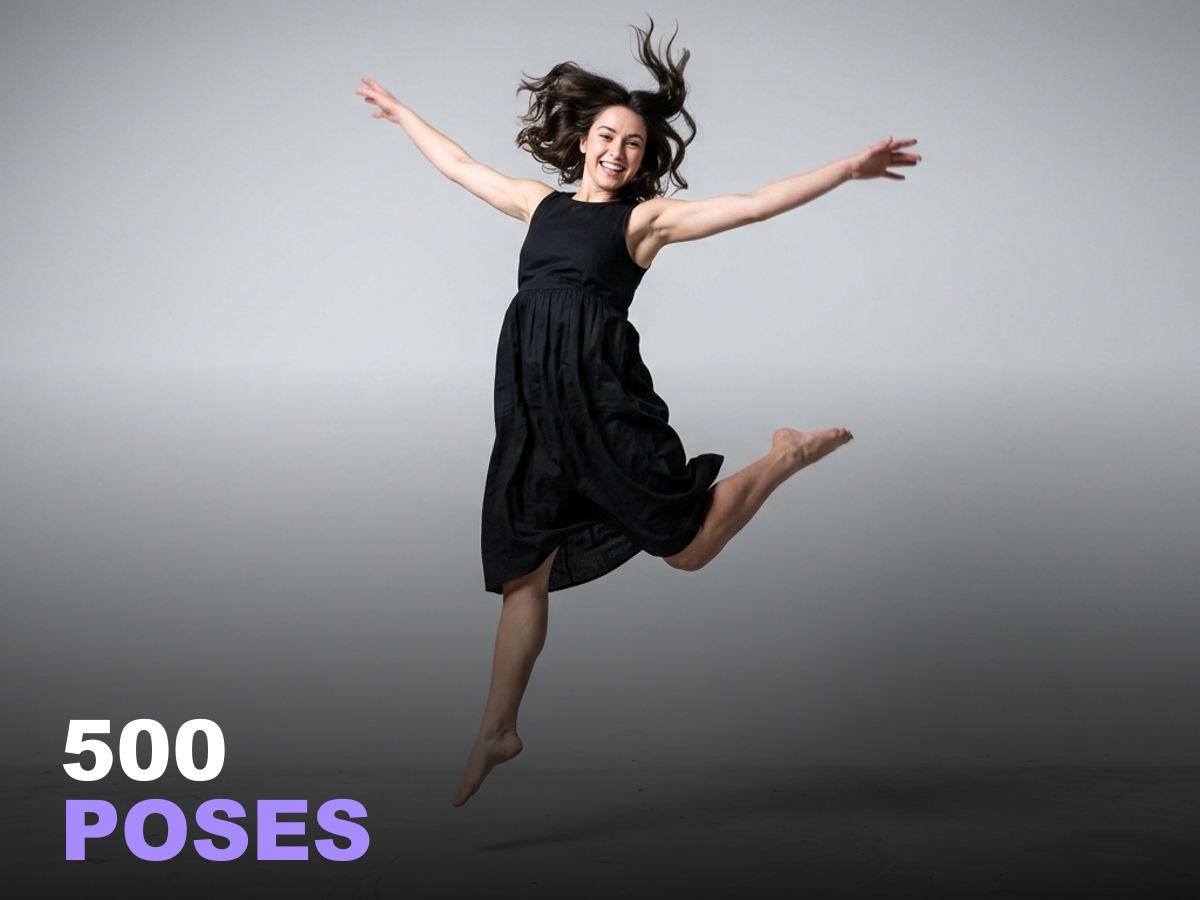
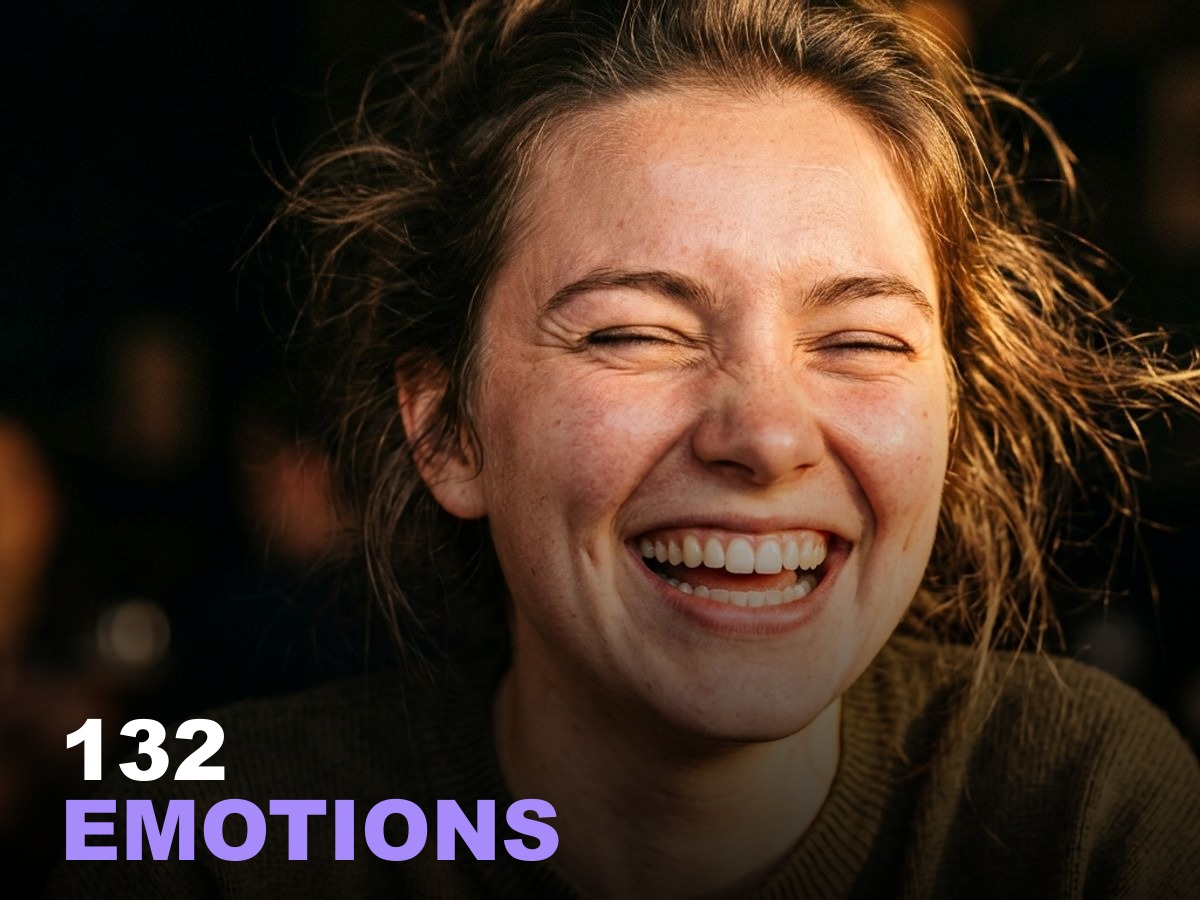
If you want to see these lighting terms applied in practice, our 500 Poses Guide and 132 Emotions Guide include optimized lighting setups built into every prompt — so you can see exactly how professional lighting terminology transforms specific poses and expressions into polished, production-ready results.
¿Listo para crear mejor contenido con IA?
Obtiene guías profesionales con fotos de referencia — deja de adivinar, empieza a crear.
Ver guías →